An interdisciplinary exploration of how Puerto Ricans are redefining futurity in defiance of imperial violence and infrastructural collapse
In the wake of hurricanes, earthquakes, and fiscal collapse, Puerto Ricans have confronted the limits of state-led reconstruction and the rise of disaster capitalism. At the same time, they have forged new community-based experiments in self-governance, collective care, and imaginative practice.
Post-Disaster Futures brings together scholars, artists, and activists. Moving between the archipelago and its diaspora, the volume traces a collective effort to rethink what repair means when the very institutions of recovery and governance perpetuate the damage they claim to fix. Through essays, interviews, poetry, and conversations, the contributors explore themes ranging from energy justice and housing displacement to memory, migration, and artistic practice. Collectively, they show how the ruins of colonial modernity can be sources of solidarity and imagination.
Contributors include Elizabeth Aranda, Alvin Padilla–Babilonia, Raúl Santiago Bartolomei, Yarimar Bonilla, Mikey Cordero, Rafael V. Capó García, Mercedes Trelles Hernández, Mónica A. Jiménez, Natalia Lassalle–Morillo, Marcelo López–Dinardi, Bettina Pérez Martínez, Edgardo Miranda–Rodríguez, Sarah Molinari, Ed Morales, Juan Carlos Rodríguez Rivera, Erika P. Rodríguez, Michael Rodríguez–Muñiz, Isabel Guzzardo Tamargo, Ana Teresa Toro, Fernando Tormos–Aponte, and Érika Fontánez Torres.
Yarimar Bonilla is a political anthropologist, professor, and contributing writer to the New York Times. Both an accomplished scholar and a prominent public intellectual, Yarimar is a leading voice on questions of Caribbean and Latinx politics. She is a regular columnist in the Puerto Rican newspaper El Nuevo Día and a frequent contributor to publications such as The Washington Post, The Nation, and The New Yorker. Bonilla is a professor in the Effron Center for the Study of America at Princeton University. Her website is https://yarimarbonilla.com.
Isabel Guzzardo Tamargo is an assistant professor of literatures of the Americas in the English Department at Seton Hall University. She has published articles and reviews in Small Axe, 80 Grados, Confluencia, and beyond. She is also a principal collaborator of the Puerto Rico Syllabus and an editor of The Puerto Rico Review.
ISBN: 9798888907405
Publication date: November 17, 2026
Table of Contents
List of Figures x
List of Tables xi
Introduction
Part I: Building from the Ruins
1. The Visitor 1
by Ana Teresa Toro
2. Undoing Cemented Dreams 10
by Marcelo López-Dinardi
3. Puerto Rico’s Ruined Landscapes 20
by Mercedes Trelles Hernández
4. Layering Resistance: Colectivo La Puerta’s Visual Interventions in Public Space 30
by Bettina Pérez Martínez
5. Interrupting the Curriculum of Puertorriqueñidad Through Decolonial Public History 40
by Rafael V. Capó García
Part II: Reimagining Citizenship and Belonging
6. American State of Exception 50
by Mónica A. Jiménez
7. American State of Exception: Toward a Legal Genealogy of Racial Exclusion 60
by Mónica A. Jiménez
8. Beyond Constitutional Uniformity: Toward Puerto Rico’s Democratic Decolonization 70
by Alvin Padilla-Babilonia
9. The Case for Puerto Rican Reparations 80
by Ed Morales
10. A Sea of Flags: Toward a Decolonial Nationalism? 90
by Michael Rodríguez-Muñiz
1. Longing for Land: The Ethics of Rematriation 100
A Conversation Between Mikey Cordero and Natalia Lassalle-Morillo
Part III: Recovery as a Futuring Praxis
12. Return Migration to a Post-Disaster Puerto Rico 110
by Elizabeth Aranda
13. Reclaiming Puerto Rico’s Energy Futures 120
by Fernando Tormos-Aponte
14. Disrupting Abandonment: School Rescues and Futuring Praxis in Puerto Rico 130
by Sarah Molinari
15. Futureproofing Against Dispossession: Confronting the Disaster-Driven Financialization of Housing 140 by Raúl Santiago Bartolomei
16. DIY Nation or Toward a Reconsideration of Social Rights 150
by Érika Fontánez Torres
Part IV: Decolonial World-Building
17. Boricua (Anti)futurisms 160
by Isabel Guzzardo Tamargo
18. Plena as a Political Project 170
Erika P. Rodríguez Interviewed by Isabel Guzzardo Tamargo
19. Illuminating Futures: Superhero Storytelling and Women’s Health in Post-Disaster Puerto Rico 180
by Edgardo Miranda-Rodríguez
20. Images for Decolonial Futures: Cuaderno No1 190
by Juan Carlos Rodríguez Rivera
Acknowledgments 200
Contributor Bios 210
Endnotes 220
“This volume invites readers to participate in the speculative labor of Borifuturism no matter where they call home. It invites us to collectively imagine a post-disaster future where displacement is not a permanent threat, where rights are protected, where cultural memory is a valued resource, and where families are not divided by imperial borders. It does not offer a blueprint or guarantee—only an opening, a proposition, a glimpse at what might be possible if we dare to imagine otherwise.” —from the Introduction by Yarimar Bonilla
"In 'reject[ing] recovery in favor of repair,' this volume offers cogent lessons for a world increasingly imperiled by political and environmental crises." —Publisher's Weekly
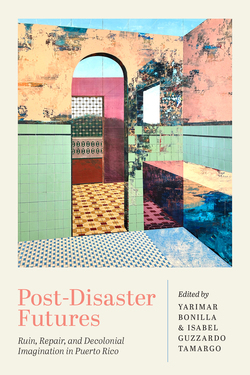
Edited by Yarimar Bonilla and Isabel Guzzardo Tamargo
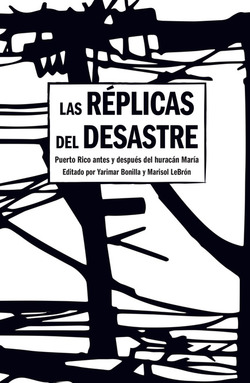
Edited by Yarimar Bonilla and Marisol LeBrón

Edited by Yarimar Bonilla and Marisol LeBrón
One of the best ways you can support Haymarket is by becoming a member of our subscription program. Receive up to 40 books per year and help ensure the future of radical publishing.
Join today and start your subscription with one or more of these new books!