
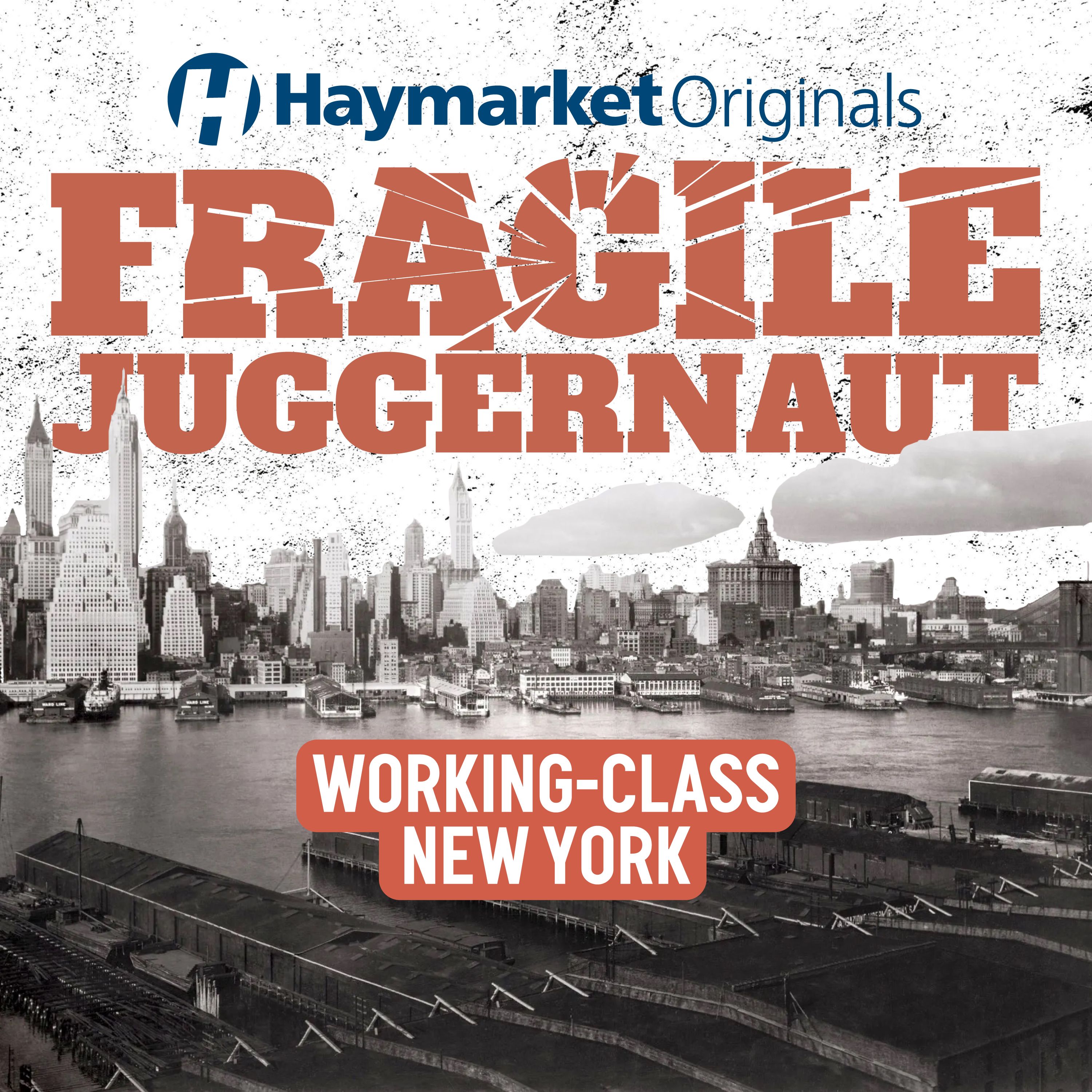
Episode 14 of Fragile Juggernaut is the first of our trio of regional episodes. It dials into New York City, the seat of the country’s largest manufacturing base, but one composed of a vast constellation of small and diverse shops; and also host to the nation’s largest port, transport system, white collar and cultural complex, and more.
With the eminent historian Joshua Freeman, Gabe and Ben talk about worker organizing outside the CIO cast–public transit workers, teachers, laundry workers and domestics–as well as what made New York City, a non-fordist city in the age of Ford, so exemplary compared to other parts of the country.
The episode features James Baldwin and Truman Capote; Irish dance halls and cruising on the piers; burial societies, Tammany Hall, and clandestine organizations; the origins of bodegas and how the mob got rackets into organized labor; the trade union origins of “Strange Fruit”; Ella Baker and Esther Cooper Jackson; the IRA and Broadway musicals; how transit workers built their union campaigning against big squeegees; the hybrid combinations of craft and industrial unionism; and the limits to workplace organization in a city defined by tremendous ethnic, religious, and neighborhood segmentation.
Featured music: “I Ain’t Got Nobody” by Count Basie; “It's Better With A Union Man” by Pins and Needles Orchestra; “Strange Fruit” by Billie Holiday; “The Boys of the Lough” by Michael Coleman; “Talking Sailor” by Woody Guthrie; “One Big Union for Two” by the Pins and Needles Orchestra; “New York Town” by Woody Guthrie.
Archival audio credits: Esther Cooper Jackson discusses domestic work research; Mike Quill debates Rep. Fred Hartley on ABC news; longshoreman and sailor Stan Weir describes conservatizing effects of the racket on the docks.
Fragile Juggernaut is a Haymarket Originals podcast exploring the history, politics, and strategic lessons of the Congress of Industrial Organizations and the rank and file insurgency that produced it. Support Fragile Juggernaut on Patreon and receive our exclusive bimonthly newsletter, full of additional insights, reading recommendations, and archival materials we’ve amassed along the way.
Buy Organized Labor and the Black Worker, 20% Off: https://www.haymarketbooks.org/books/991-organized-labor-and-the-black-worker-1619-1981
We'll be back soon with more episodes of Heat the Ground Up!
Our podcast host is Clarissa Redwine. You can find more of her work at strike.kitchen. This entire oral history is released under a Creative Commons Attribution Share-Alike 4.0 International License. The music was composed by Michael T. Simonelli over at the podcast production company Charts and Leisure.
Welcome to Heat the Ground Up, an oral history of Starbucks Workers United. In this episode, Starbucks management takes the anti-union campaign to a new level and, after a series of bad management decisions, workers in San Antonio are driven to unionize. Over the course of the series, we’ll follow one of the most important labor fights in a generation through the voices and perspectives of the workers who organized it from the ground up.
This podcast is a Haymarket Originals production. Visit haymarketbooks.org to find indispensable radical books, podcasts, virtual events, and other political education resources, including Unions of Our Own: Eight Building Blocks to Change Work and the World by Daniel Gross, which is 20% Off online. Please also consider joining the Haymarket book club. It’s one of the best ways to support Haymarket, and help fund projects like this one.
Our podcast host is Clarissa Redwine. You can find more of her work at strike.kitchen. This entire oral history is released under a Creative Commons Attribution Share-Alike 4.0 International License. The music was composed by Michael T. Simonelli over at the podcast production company Charts and Leisure.
Welcome to Heat the Ground Up, an oral history of Starbucks Workers United. In this episode, we get an inside look at how the baristas at Blanco, in San Antonio Texas, win a union with help from Starbucks Workers United. Over the course of the series, we’ll follow one of the most important labor fights in a generation through the voices and perspectives of the workers who organized it from the ground up.
This podcast is a Haymarket Originals production. Visit haymarketbooks.org to find indispensable radical books, podcasts, virtual events, and other political education resources, including No Neutrals There: US Labor, Zionism, and the Struggle for Palestine by Jeff Schuhrke, which is 20% Off online. Please also consider joining the Haymarket book club. It’s one of the best ways to support Haymarket, and help fund projects like this one.
Our podcast host is Clarissa Redwine. You can find more of her work at strike.kitchen. This entire oral history is released under a Creative Commons Attribution Share-Alike 4.0 International License. The music was composed by Michael T. Simonelli over at the podcast production company Charts and Leisure.
Welcome to Heat the Ground Up, an oral history of Starbucks Workers United. In this episode, we’ll hear workers fight for material gains and develop a concrete understanding of how union organizing can counteract exploitation and change workers’ lives. Over the course of the series, we’ll follow one of the most important labor fights in a generation through the voices and perspectives of the workers who organized it from the ground up.
This podcast is a Haymarket Originals production. Visit haymarketbooks.org to find indispensable radical books, podcasts, virtual events, and other political education resources, including Song for a Hard-Hit People: A Memoir of Antiracist Solidarity from a Coal Miner’s Daughter by Beth Howard, which is 10% off online. Please also consider joining the Haymarket book club. It’s one of the best ways to support Haymarket, and help fund projects like this one.
Our podcast host is Clarissa Redwine. You can find more of her work at strike.kitchen. This entire oral history is released under a Creative Commons Attribution Share-Alike 4.0 International License. The music was composed by Michael T. Simonelli over at the podcast production company Charts and Leisure.